
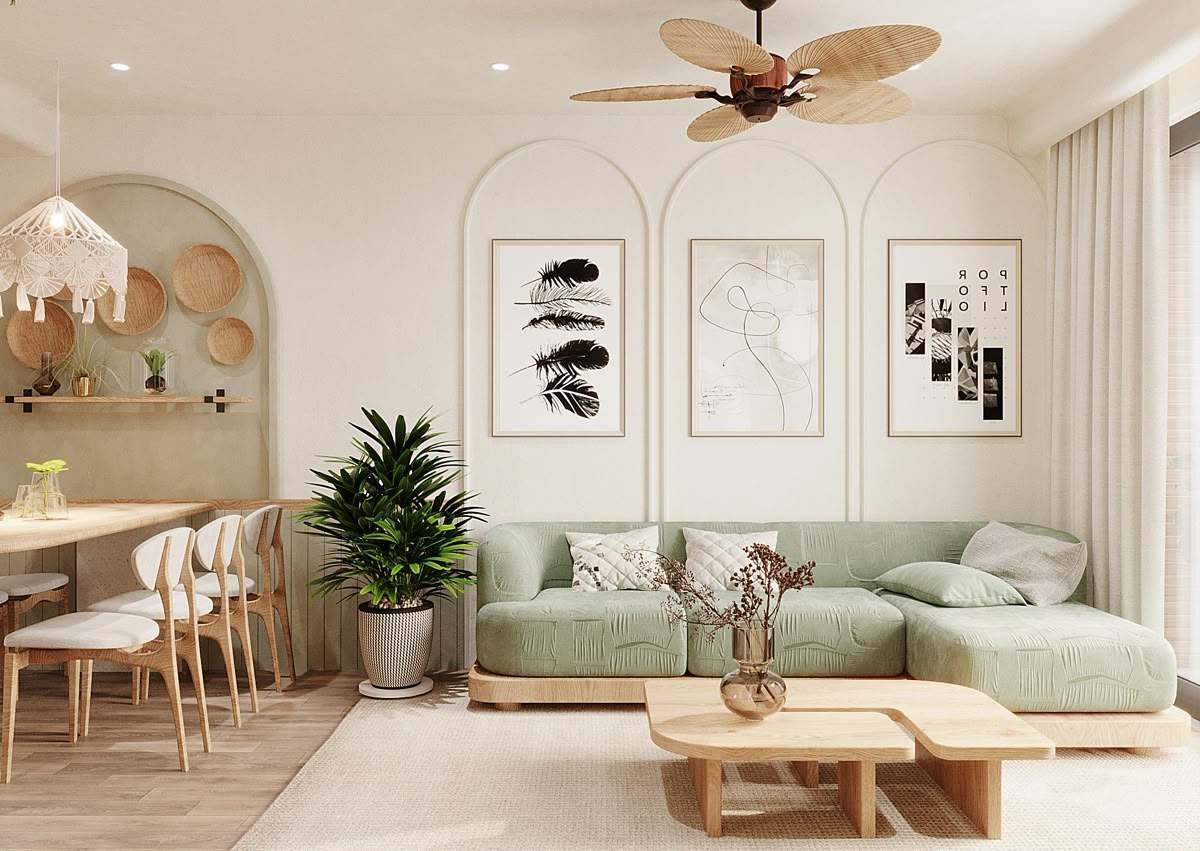
Scandinavian interior design is a design style that originated from the Nordic countries in the 20th century. It centers on simplicity, functionalism and minimalism influenced by the locale’s harsh winters, which led the people to yearn for bright, warm interiors. Key aspects include light wood accents, white walls, natural lighting and a neutral color palette.
The goal is to create a living space that is not just attractive but also contributes to overall well-being by integrating nature and emphasizing comfort in daily life. Scandinavian interiors merge practicality and aesthetics, resulting in a relaxed, cozy and appealing environment.
1.Features: Scandinavian design principles encourage the use of clean lines, simple designs and a focus on functionality above all. The minimalist aesthetic highlights inherent beauty in the basics. Chic yet flexible designs offer a sense of calm and order. The iconic simplicity exudes a serene, inviting space. Home designs embody the Danish philosophy of “Hygge,” which signifies a cozy, happy living space.
2.Materials: Scandinavian furniture is characterized by the use of natural wood, often light in color. The design favors light-colored woods such as beech, pine and spruce. The wooden floors, furniture and accents blend seamlessly, constructing a harmonious image.
3.Textures: The raw textures of nature bring a dose of warmth to this design style. The Scandinavian interior design’s key elements are soft lines, gentle contours and an overall soothing environment.
4.Quality: Scandinavian furniture design is renowned for its flawless craftsmanship with a focus on quality. Functional designs, along with gentle lines, characterize Scandinavian furniture design. Often, Scandinavian-style furniture pieces come from solid woods to uphold quality and sustainability.
In summary, Humans naturally gravitate towards organic color palettes, soothing designs, and connections to nature, which is why Scandinavian design has continued to be famous for decades. It’s now seen as a timeless design movement beloved by generations.